
Anger
School Nurse’s Mental Health Toolkit

We all experience anger.

Anger is a secondary emotion. What is underneath?

Anger occurs when we feel attacked, threatened, afraid, disrespected, or humiliated.
Outbursts can be a sign of anxiety, depression, trauma, stress, or poor emotional regulation. Underlying mental health conditions or challenging life situations can lead to anger.
Students often need support to learn how to manage their anger and minimize the risk of aggressive behavior.
Strategies
SAFETY FIRST
If a student is displaying anger AND aggressive behavior that is risky to the student and others, follow your school’s crisis intervention plan.
Manage your own emotions. Angry students may trigger feelings of anxiety and anger in you. Before you can help, you must manage your own feelings and remain calm. Raising your voice will escalate the student’s emotion.
Be aware of your own body language and position. Take a non-threatening stance and project calm.
Minimize demands on the student. When a student is angry, set aside demands (“lower your voice, sit down, show me your pass”) until the student calms. Placing demands on an angry student is likely to increase their anger.
Offer supportive comments and choices. In the heat of an angry moment, students need to feel supported and to calm down before they can engage in any problem solving:
- Say “I can see you’re really upset. Would you like to talk or take a few minutes to relax in my office?” This shows the student that you understand and allows them to decide how you can help.
- Give choices to promote calm in the moment. Offer a quiet corner, reading, drawing, coloring materials, belly breathing, 54321, music, or stress balls and other fidget items. Go for a walk with them.
- Listen without judgment. Students may need to vent without interruption, or talk through their feelings with you or someone they trust. You don’t have to solve the problem in order to help.
Teach these ways to understand anger:
Mindfulness
Mindfulness helps us understand and deal with distress and to purposefully observe one’s own thoughts and feelings with kindness, not judgment.
Encourage students to slow down, accept their emotions, and focus on breathing.
Once the student is calm, explain that everyone experiences anger. It can hurt us and others if we don’t recognize it and know what to do.
Picture anger as a wave. Be mindful of when you’re at the top of the wave, then ride the wave, waiting until anger levels fall. The tension and “adrenaline” during peak anger is temporary and students can learn to wait for it to pass. The wave visualization can help the student manage their anger.
Picture anger like an iceberg. The anger shows, but there are other emotions underneath. Ask: “Is your anger hiding another feeling?” (e.g., sadness, worry, etc.)
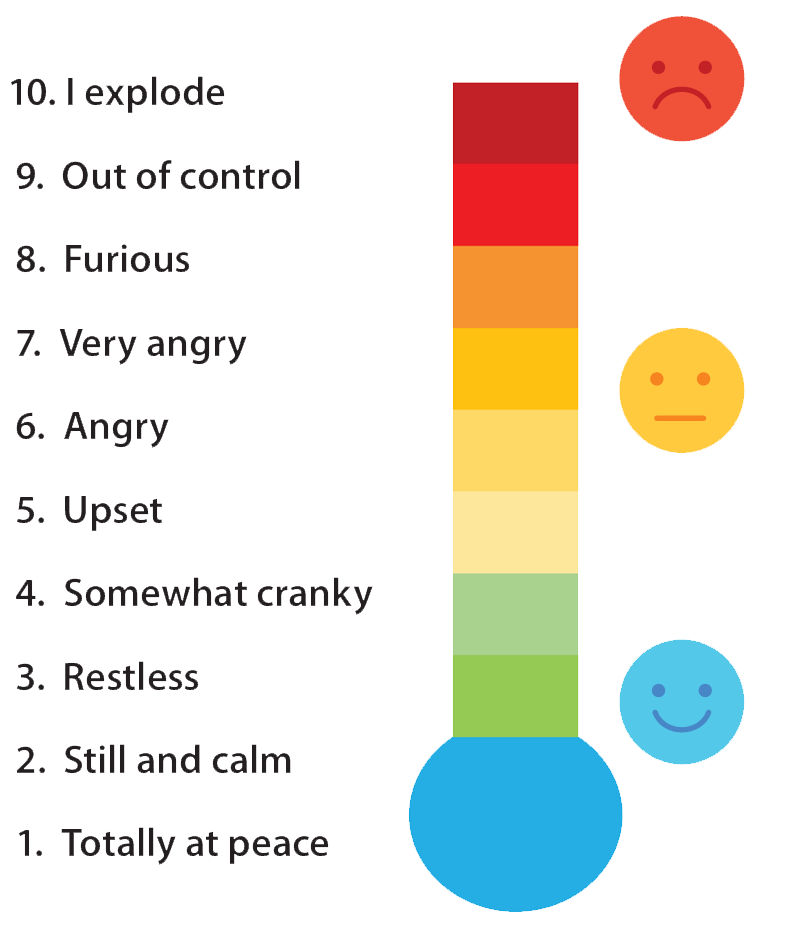
The Anger Thermometer
Teaching students about how to measure their anger using an anger thermometer can help them manage anger.
Show the student how the levels on the thermometer correspond to their emotions and bodily feelings.
How does the student feel and behave:
- When they are most angry?
- When they are in the middle or upset?
- When they are peaceful?
When students learn about how anger feels in their body and mind, relating to the anger thermometer, students can:
- Put words to their feelings.
- Start to employ different coping strategies.
- Identify when they need to calm down before acting.
Anger Management Strategies
Encourage students to practice using these strategies before their anger temperature rises to a high level.
Relaxation strategies – take a time out, belly breathing, applying cold over upper part of face with ice pack, tensing and releasing muscles. Mindfulness strategies – 54321, focusing on all your senses.
Distraction strategies – focusing attention on something else (e.g., favorite song, reading, coloring, exercising, object in the room).
Changing thoughts – When we can identify unhelpful thoughts that fuel anger, and change them to helpful thoughts, our anger can lessen. For example:
- They don’t control me. I’m not taking the bait.
- I can stay calm.
- As long as I keep my cool, I’m in control.