Coping and Relaxation Strategies
School Nurse’s Mental Health Toolkit
It is difficult to learn something new
when we are anxious, angry, or distracted.
Teach and practice coping
skills when everyone is calm.
Breathing Techniques
Belly Breathing
- When we are anxious, we breathe from our chest.
- Belly breathing stimulates the vagus nerve which activates the relaxation response.
- Exhale longer than inhale for increased effect.
Young Children:
- Lie down so the back is supported by a surface (couch/floor).
- Place a toy on the belly and watch it rise and fall.
Box Breathing
- Exhale to a count of four.
- Hold with lungs empty for four counts.
- Inhale to a count of four.
- Hold the air in your lungs for a count of four.
- Exhale to a count of 4 and start over.
Take 5 – Combines breathing and sensory input.
- Trace one hand with the finger on the opposite hand.
- Breathe in deeply as you trace your thumb from base to tip.
- Breathe out as you trace back to your palm.
- Breathe in as you trace to the tip of your index finger.
- Breathe out as you trace back to your palm.
- Go around your whole hand.
- Can do this under the desk at school.
Older Children:
- Blow on pinwheel forprolonged exhalation.
- Imagine filling room with a color while exhaling.
Teens:
- Hand on sternum, hand over belly button and focus on moving hand on abdomen only.
- Counting inhale/exhale pattern: 4 second inhale, 7 seconds exhale.
54321 Coping Strategy
54321 is a technique to reduce anxiety or stress. Tell the student: Identify 5 things you can see, 4 things you can touch, 3 things you can hear, 2 things you can smell, and 1 thing you can taste.
Belly Breathe with Elmo
Whenever you feel like a monster, listen to Colbie Caillat and Common’s advice and belly breathe. Put your hand on your tummy and breathe right through it!
Belly Breathing for Older Kids
Learn belly breathing. Taking controlled breaths can help control feelings like anxiety and stress.
Muscle Relaxation Technique
Progressive Muscle Relaxation or “Body Scan”
When we are anxious our bodies respond with muscle tension. Progressive muscle relaxation reduces muscle tension and associated anxiety.
- Tense muscles first – from head to toe – and then release. This allows easier letting go of muscle tension all over the body.
- This can be done without others noticing, even while in class.
- Squeeze fists as tight as you can (under desk or in pockets) for 10 seconds, then release.
- Squeeze knees together as tight as you can (under desk) for 10 seconds, then release.
Distraction Strategies
Choose an item you can see in front of you. Spell it out, forward and then backward.
- Pick a color and name everything you can see that matches that color.
- Hum a song quietly.
- Think about your favorite TV show. Try to remember all the actors’ names and what they were last wearing.
- Focus on one object and think about how you would change each aspect of its design.
- Choose a category (what you see around you, animals, countries, people, food, etc.) and try to name one item for each letter of the alphabet.
Ways to distract yourself at home:
- Listening to music.
- Watching TV.
- Reading.
- Drawing, coloring, or journaling.
Door Method Relaxation Technique*
This technique can be helpful for falling asleep, staying calm, and reducing distractions.
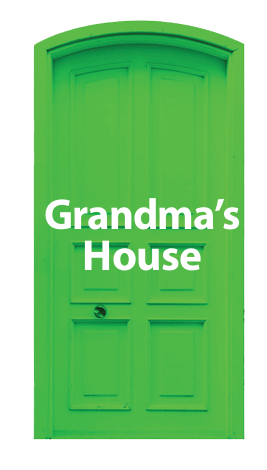
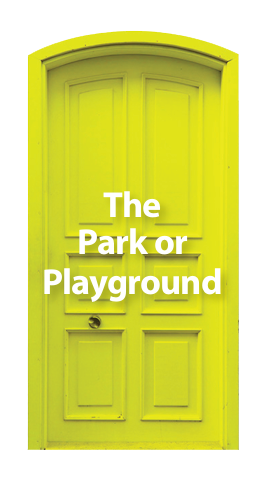
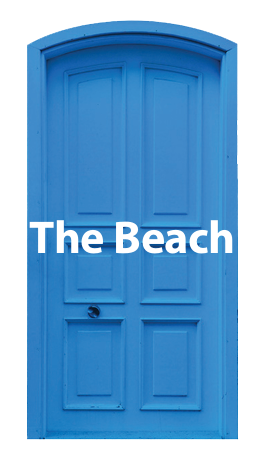
- Picture four doors, all hiding a place or something that brings joy.
- Pick a door you want to go in and walk in. What do you see there? Look around and describe all that you experience – sights, sounds, and smells.