
Self-Harm
School Nurse’s Mental Health Toolkit
Self-harm (non-suicidal self-injury) occurs when a person hurts oneself on purpose.
ASK
 Suicidal thoughts can be present in a person who self-harms (but self-harm does notautomatically mean a person wants to die).
Behavior might be a momentary escape from intense distress such as loneliness, sadness, fear, or shame.
Sometimes it is hard to stop because it helps them feel better.
Self-harm can be a way to take control when everything else is out of control (family conflict, bullying, or trauma).
Self-harm might include:
- Cutting.
- Burning.
- Hair pulling.
- Skin-picking or biting.
- Hitting or punching self with intent to cause harm.
- Risky behaviors (trying to get hurt on purpose).
Did you know?
Self-harm is a cry for help.
Kids and teens with mental health conditions are at the highest risk for self-harm. These include:
- Depression.
- Substance abuse.
- Sexual abuse.
- Severe abuse or abuse by a family member.
- Anxiety disorders.
- Eating disorders.
- PTSD.
- Borderline personality disorder.
Average onset for self-harm is 15 years old but females are more likely to be younger.
Of people who self-harm, 25% only have one episode.
The majority of people who self-harm stop after a period of five years.
Severity of self-harm can range from superficial wounds to lasting disfigurement.
Self-harm vs. Suicidal Behavior
Self-Harm
Intent
To get immediate relief from negative emotions
Repetition
More frequent
Lethality
Less lethal means but potential for fatility
Psychological Consequences
Often used to releve psychological pain
Suicidal Behavior
Intent
To die in order to permanently escape pain
Repetition
Less frequent
Lethality
Tends to involve more lethal means
Psychological Consequences
Often aggravates psychological pain
Self-harm Signs
What you might see:
- Scars, often in patterns (hands, arms, thighs, stomach).
- Fresh cuts or wounds.
- Wearing long sleeves or long pants to hide injury even in hot weather.

What you might hear from the student:
- Frequent reports of accidental injury or risky behavior.
- Problems in relationships with family or peers.
- Mood changes that are impulsive or intense.
- Signs of depression or anxiety.
- Abuse of alcohol, marijuana, or drugs.
- Asking for bandages but not showing wounds
What peers or family might see:
- Spending time on websites, message boards, or social media devoted to self-harm.
- Exchanging texts devoted to selfinjury topics.
- Exchanging photos of self-harm wounds.
- Talking about self-harming behaviors in general or about self-harming thoughts.
Strategies
Approach with curiosity, not judgment.
Ask open-ended questions.
 “Sometimes, when some kids are stressed, they hurt themselves on purpose. Have you ever hurt yourself on purpose without intending to die?”
“I’ve seen those scars on your arms and I think you might be hurting yourself. If you are, I want you to know that you can talk to me about it.”
Asking questions does not make the student engage in self-injuring behavior.
Offer hope.
“You are not alone. Many students have experienced the same feelings and have gotten better.”
“These feelings are treatable, and you can develop safer ways to deal with negative feelings than hurting yourself.”
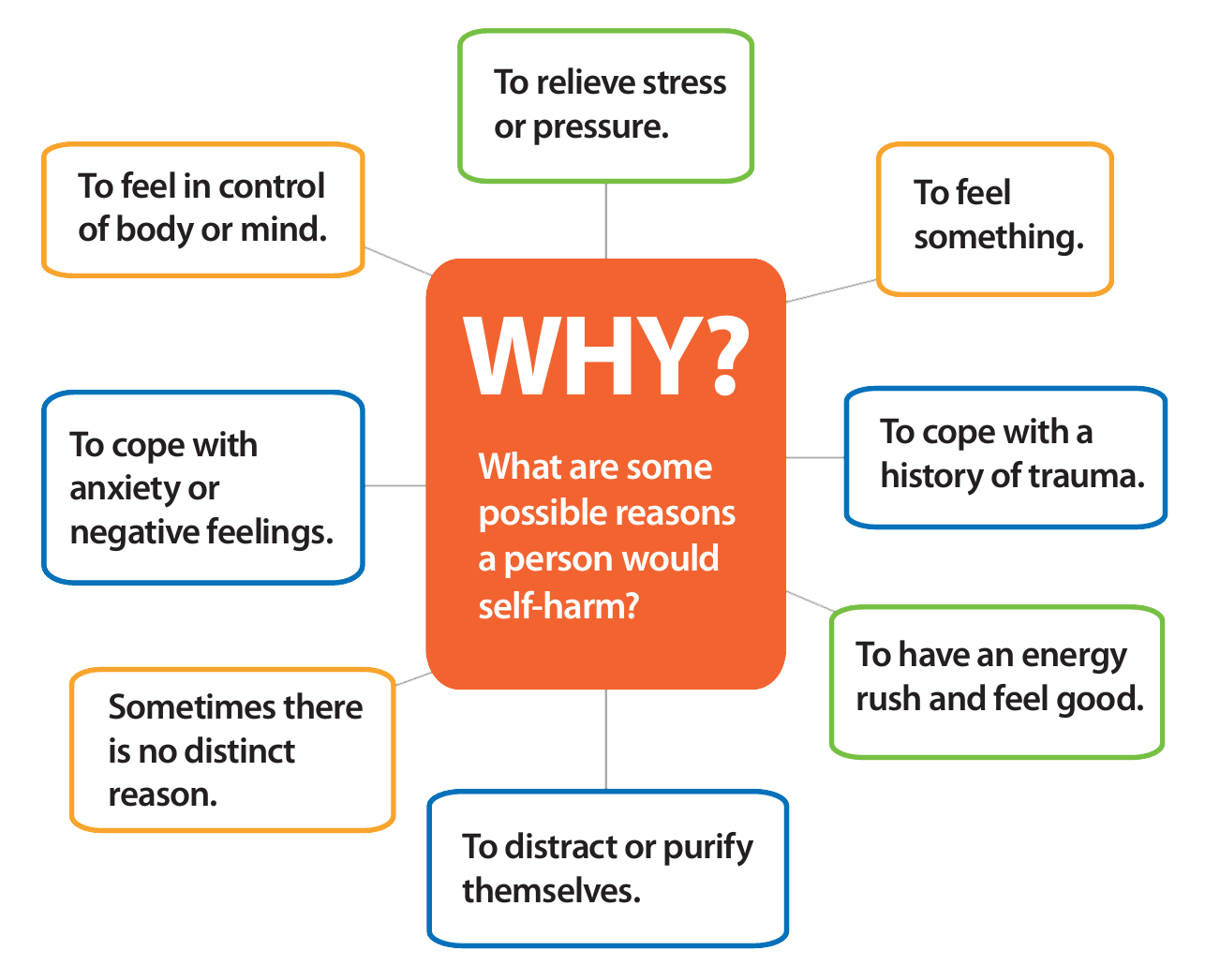
WHY? self-harm graphic data is provided by the Cornell Research Program on Self-injury and Prevention. For more information on self-injury, intervention, and treatment, click here.

Keep the student safe with you while you contact school resources.
Connect and communicate with school staff, caregivers, and pediatric clinicians. Know your school’s protocol and other members of your crisis team before a crisis, and follow up after referral.